

By Lumiforte on October 2026
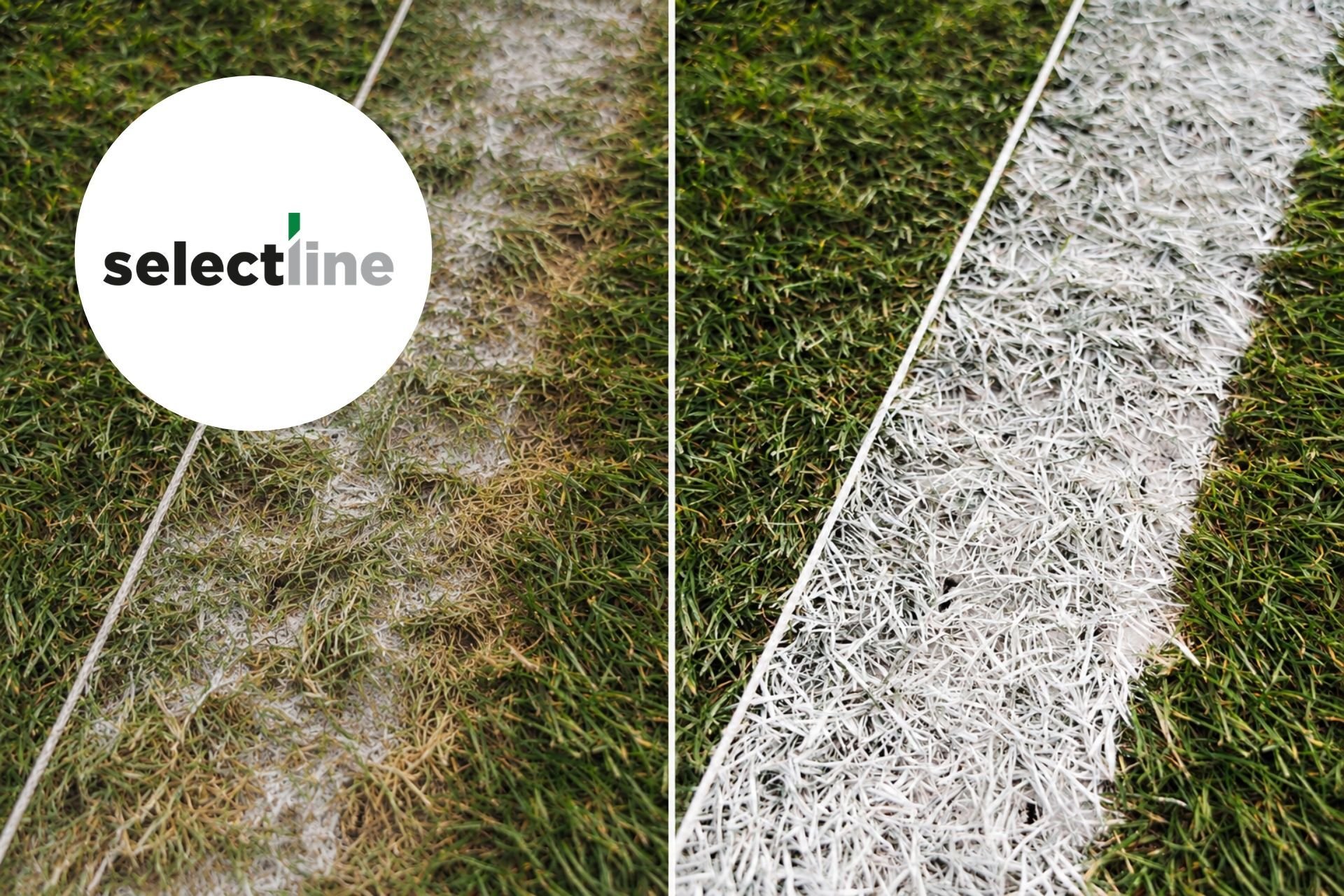
A crisp white line looks simple. But what you mark it with decides whether your grass stays healthy, how long the line stays visible and how many litres and hours you put into it every week. Three products often get mixed up: chalk, latex (ordinary wall paint) and proper line marking paint. On a living grass pitch, they behave completely differently.
At a glance
| Chalk | Latex (wall paint) | Professional line marking paint | |
|---|---|---|---|
| Made for | temporary marking | walls and flat surfaces | living sports turf |
| Visibility | dull, average | variable, often dull | bright white, highly visible |
| In rain and dew | washes away quickly | sticks poorly, flakes | stays visible for longer |
| Effect on the grass | barely sticks | can seal and damage the blade | thin layer, less stress |
| Consumption | little each time, but constant re-marking | thick layer, lots of litres per pitch | high coverage, few litres per pitch |
| Best for | one-off events | not really for grass at all | match and training pitches |
Why grass reacts differently to a wall
A grass blade is alive. It breathes, gives off moisture and makes its own food through photosynthesis. Anything you apply to the leaf puts a layer over it. The question is not whether you apply a layer, but how thin and how controlled it is.
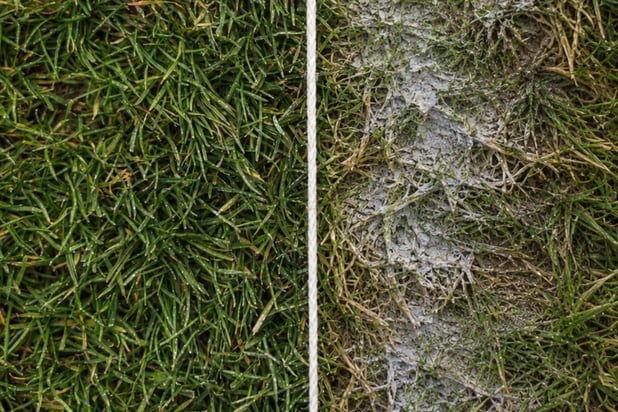
Proper line marking paint is developed for exactly that. It forms a thin, controlled layer on the blade, stays within a narrow pH range and lets the leaf largely carry on breathing and photosynthesising. Chalk and latex are not made for this: chalk barely sticks, while latex wall paint leaves a film on the leaf that is too thick and seals it off.
Chalk: cheap, but short-lived
Chalk is fine for a one-off marking, but it does not last. A heavy shower or a heavy morning dew washes most of the line away. The colour is dull and only moderately visible, especially in low sun or on camera. The result: you are back out marking again and again, and on a pitch that gets regular use, that work soon adds up.
Latex: wall paint does not belong on grass
Latex is wall paint. It is designed to stay put for years on a primed, dead, flat surface. On a grass blade, the same paint forms a layer that is too thick and seals the leaf off. That layer can restrict breathing and photosynthesis, so the blade discolours or dies back. Its make-up and pH are not suited to grass.
On top of that, latex sticks poorly to grass, flakes, often has to be thinned and mixed first, and can block up your line marker. Wall paint is cheap to buy, but expensive in the long run.
Professional line marking paint: made for grass
Line marking paint starts with the grass blade, not the wall. Every property is tuned to a living sports pitch:
- Thin and controlled. A fine layer on the blade means less stress and less visible damage.
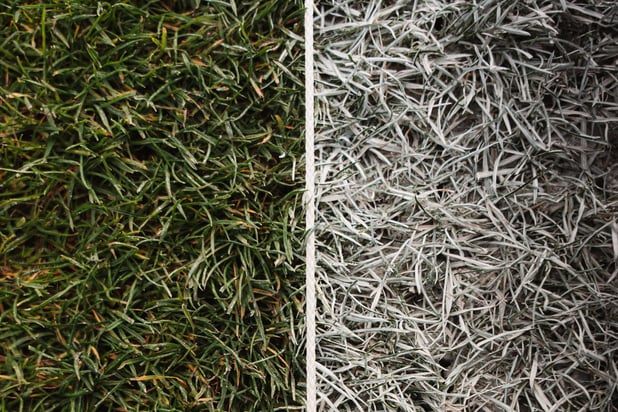
- Bright white. The white pigment (titanium dioxide) gives a clean, highly visible white, even in rain or low sun.
- Visible for longer. In difficult conditions, a strong professional paint often stays visible one to two weeks longer than chalk or wall paint.
- Grows out naturally. The line fades gradually with mowing, without flaking.
- Made for your machine. Line marking paint runs smoothly through spray and roller markers, with the right nozzle and without blockages.
Consumption: fewer litres per pitch
This is often the biggest difference, and the one most often overlooked. Because line marking paint is rich in pigment and covers well, a single marking gives you a crisp white line. Latex wall paint often needs two coats and sits thicker on the grass. So with line marking paint you use fewer litres per pitch, and save time and work.
Lumiforte: line marking paint made for your grass
At Lumiforte, every line marking paint is developed for natural grass. That goes for our concentrates and our ready-to-use paints alike. They are developed and tested in-house, and proven in practice on real sports pitches, by groundsmen who work with them every week.
We set the bar high on three things:
- Quality. A bright, crisp white that stays visible, match after match.
- Ease of use. Paint that runs smoothly through your machine, dries quickly and is easy to dose.
- Healthy grass and soil. A good-looking line should never come at the expense of your pitch. That is why the health of grass and soil is a priority in every formulation.
Chalk washes away. Latex wall paint is for walls. Proper line marking paint is made for grass.
Curious what our line marking paint can do on your pitch? Ask your dealer for a free, no-obligation demo, or get in touch with us.

Which dilution should I use for line-marking paint?
Orchard Sunburn Protection: What It Earns per Hectare